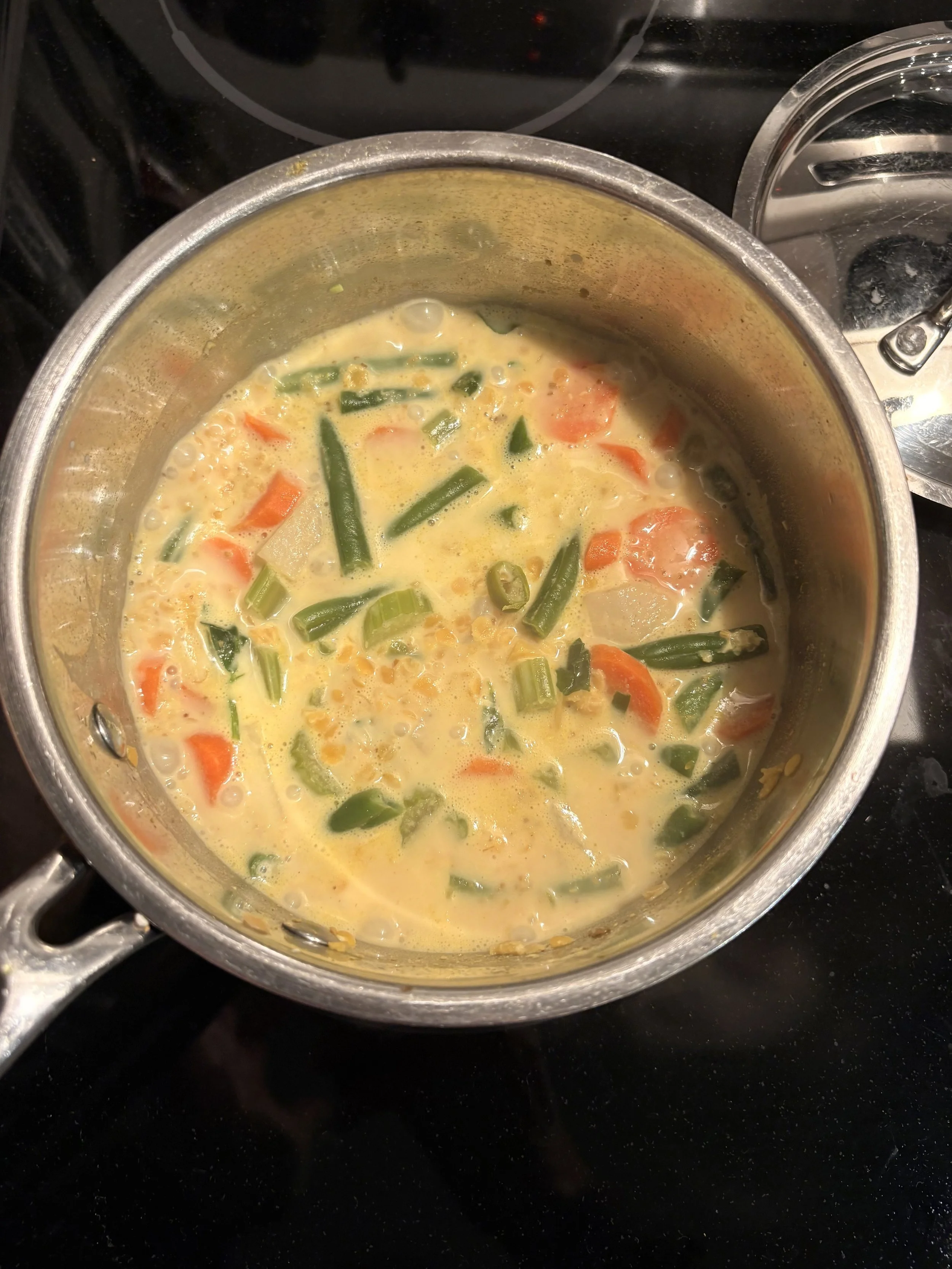
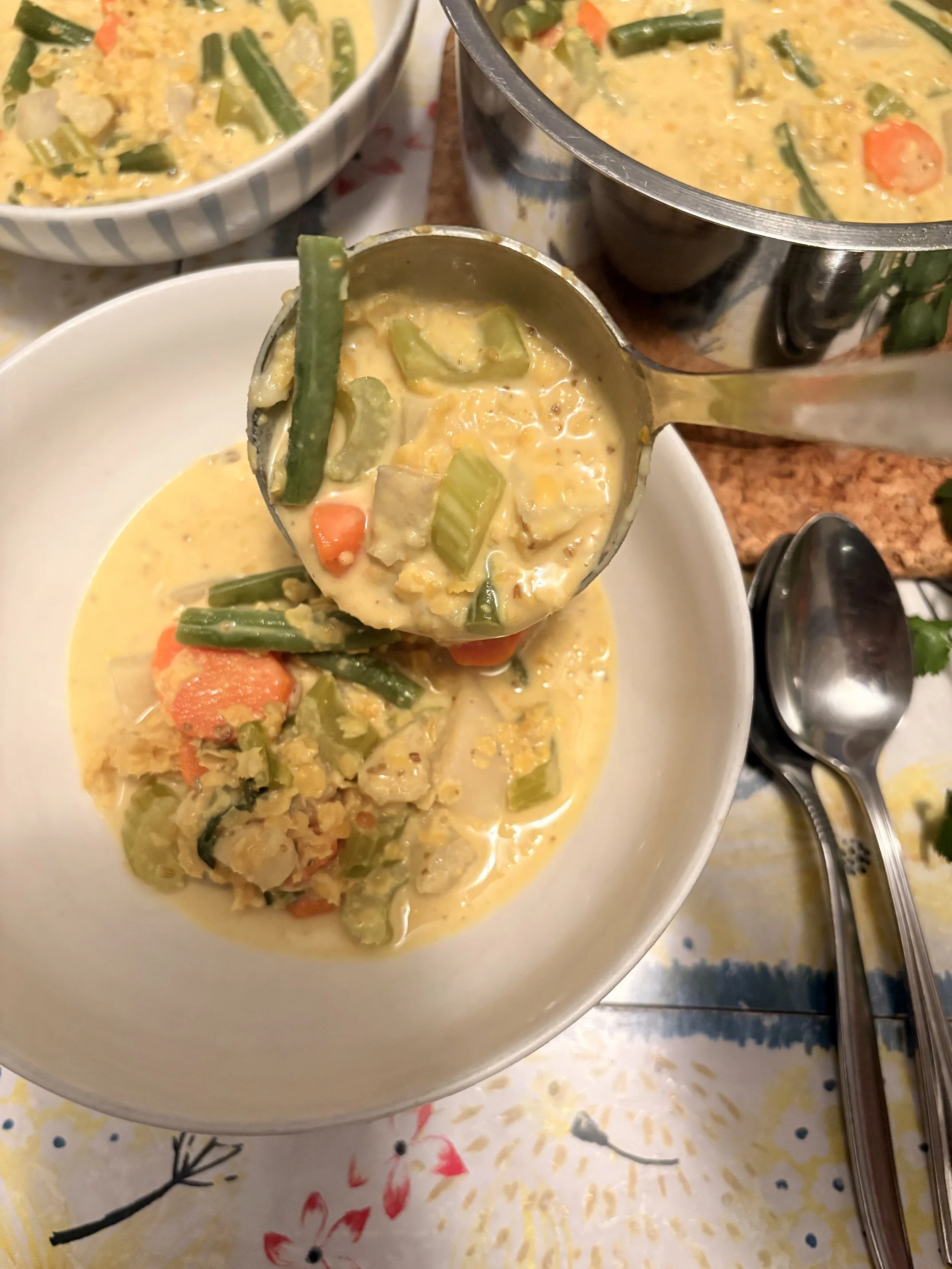
Inspired by traditional Ayurvedic kichari, a nourishing and cleansing one-pot dish typically made with rice, lentils, spices and sometimes vegetables, this Vegan Red Lentil & Taro Kichari offers a comforting and balanced meal for the cooler fall season. Traditionally, kichari is valued in Ayurveda for its simplicity, digestibility and ability to nourish and cleanse, while supporting healthy digestion. This variation brings together grounding root vegetables, fibre-rich red lentils and a balance of warming and cooling elements. Ginger, fenugreek and turmeric bring warmth- perfect for autumn, balanced by fennel and coriander’s cooling qualities, all combined to support digestion. Coconut cream adds a cooling, creamy richness, with a touch of cane sugar offering a natural sweetness to round out the spices. Fenugreek leaves are more heating than fenugreek seeds, so if pitta dosha is elevated, substitute the leaves with seeds. Thai green chili can also be omitted to make the dish gentler and less heating. The result is a wholesome, satisfying dish that brings together contrasting qualities in harmony, just right for the autumn season.
Vegan Red Lentil & Taro Kichari
Makes 2-3 servings
Prep Time: 10 min
Cook Time: 15 minutes
INGREDIENTS
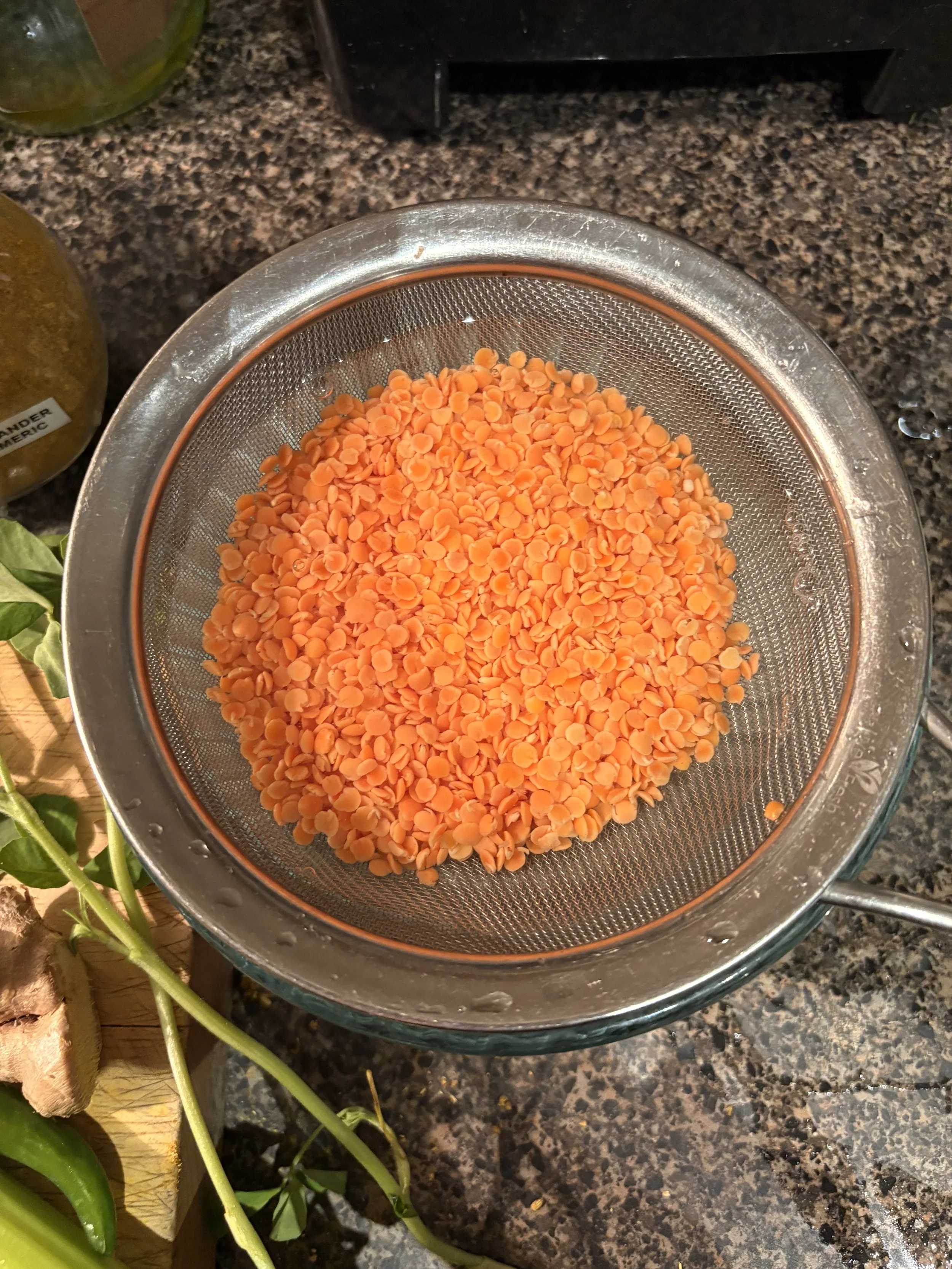
⅓ cup red lentils, soaked for 5 minutes and rinsed until water is clear
1 tsp olive oil
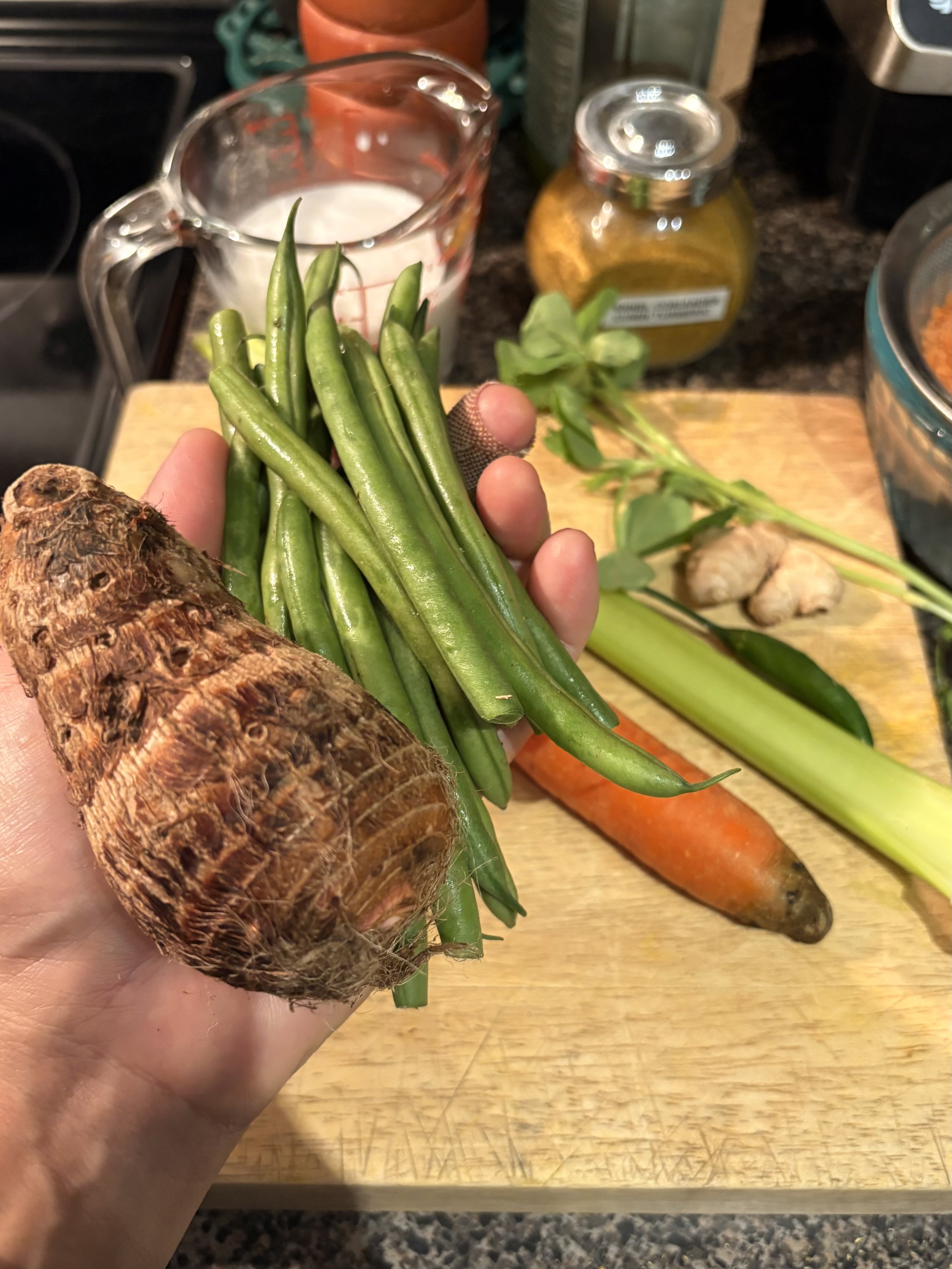
1 carrot, peeled & cut in ½ in rounds
1 handful of French green beans, ends trimmed and cut in half
1 celery stalk, cut in chunks
1 taro, peeled & cut in ½ inch chunks
1 small knob of sliced ginger root
1 tsp ground fennel
1 tsp ground coriander
¼ tsp ground cumin
¼ tsp turmeric powder
1 or 2 strands of fresh fenugreek leaves, or ¼ tsp dried (optional)
1 Thai green chili (optional)
1 tsp raw cane sugar (optional)
¼ - ½ cup coconut cream
¾ cup water
Soma salt to taste
INSTRUCTIONS
1. Prepare the ingredients
Soak and rinse the red lentils.
Prepare all the vegetables and set aside.
2. Prepare the spices
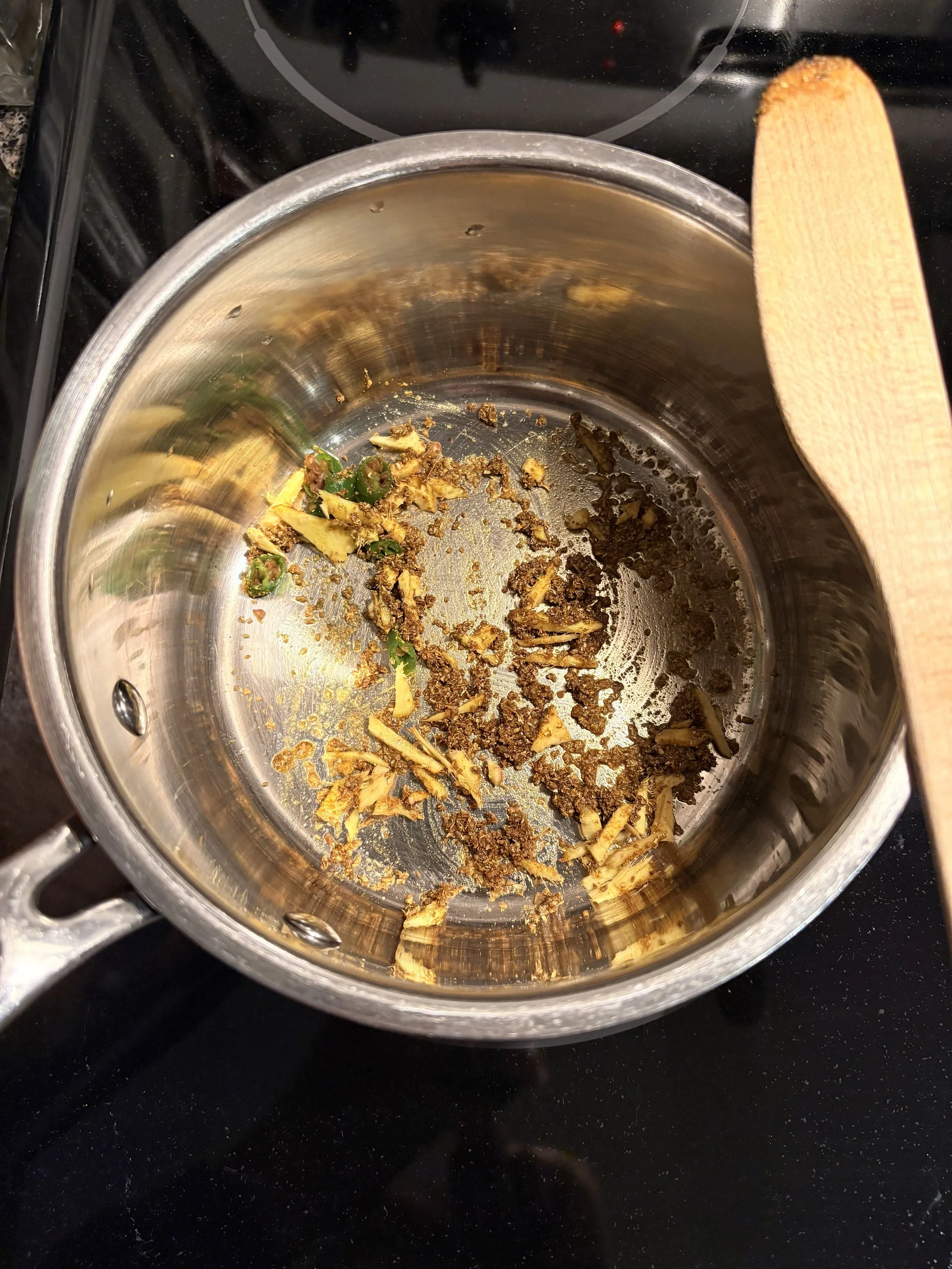
Heat the olive oil in a medium-sized pot over medium heat.
Add the ginger, fennel, coriander, cumin, turmeric and Thai green chili (if using). Sauté briefly for aroma to release.
3. Cook the vegetables and lentils
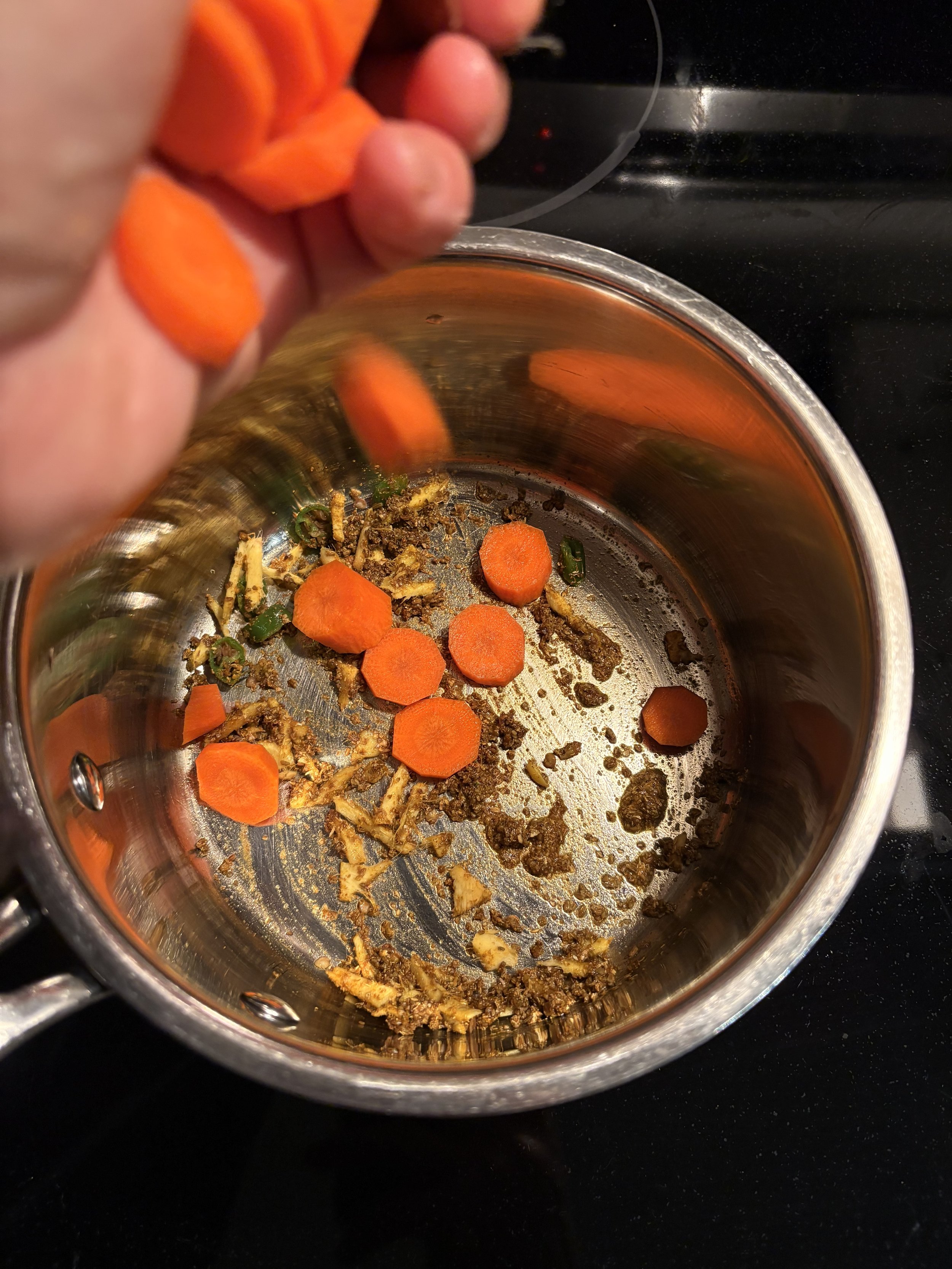
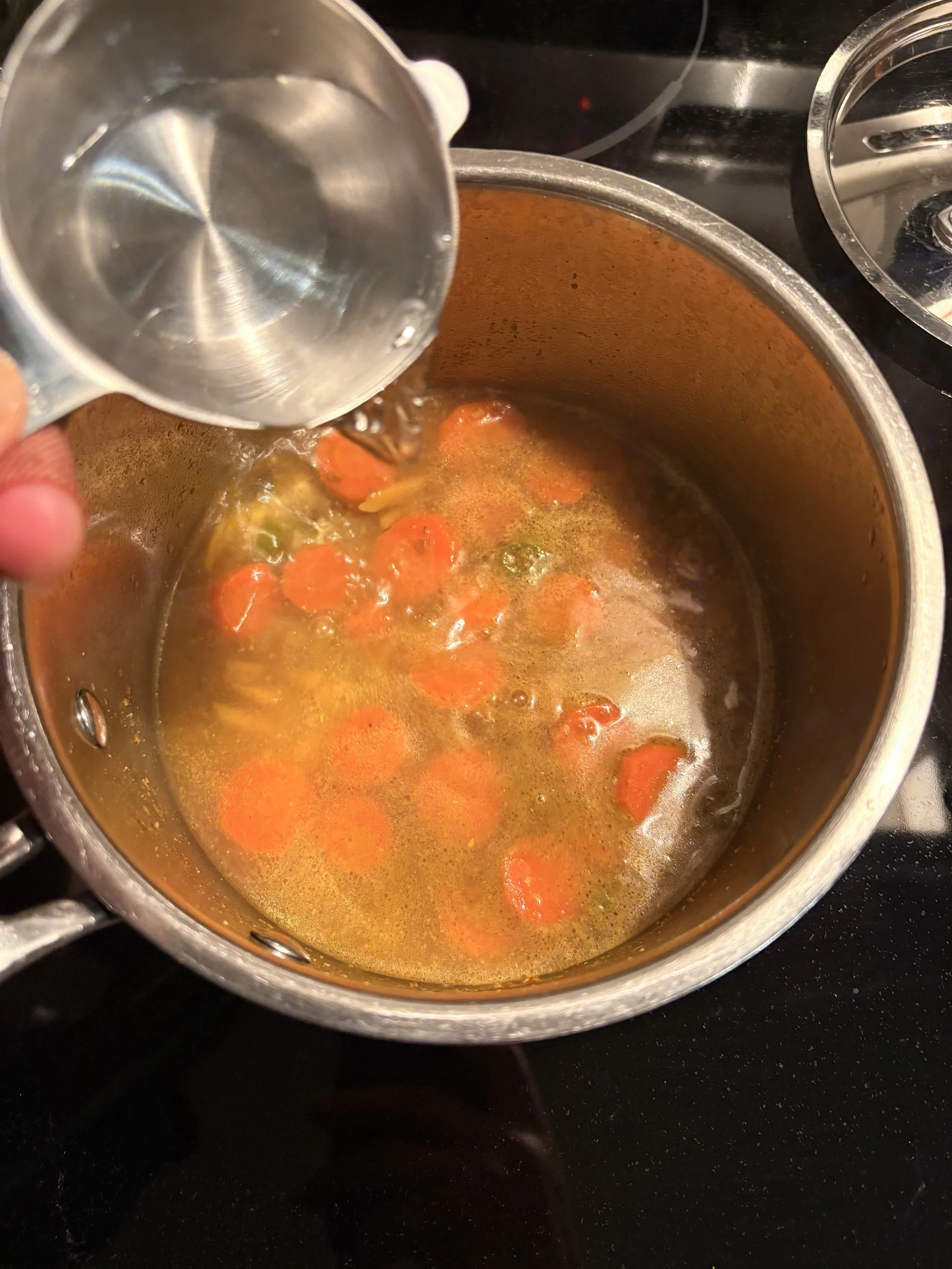
Add the carrots and water. Increase the heat to high and cook carrots for a few minutes.
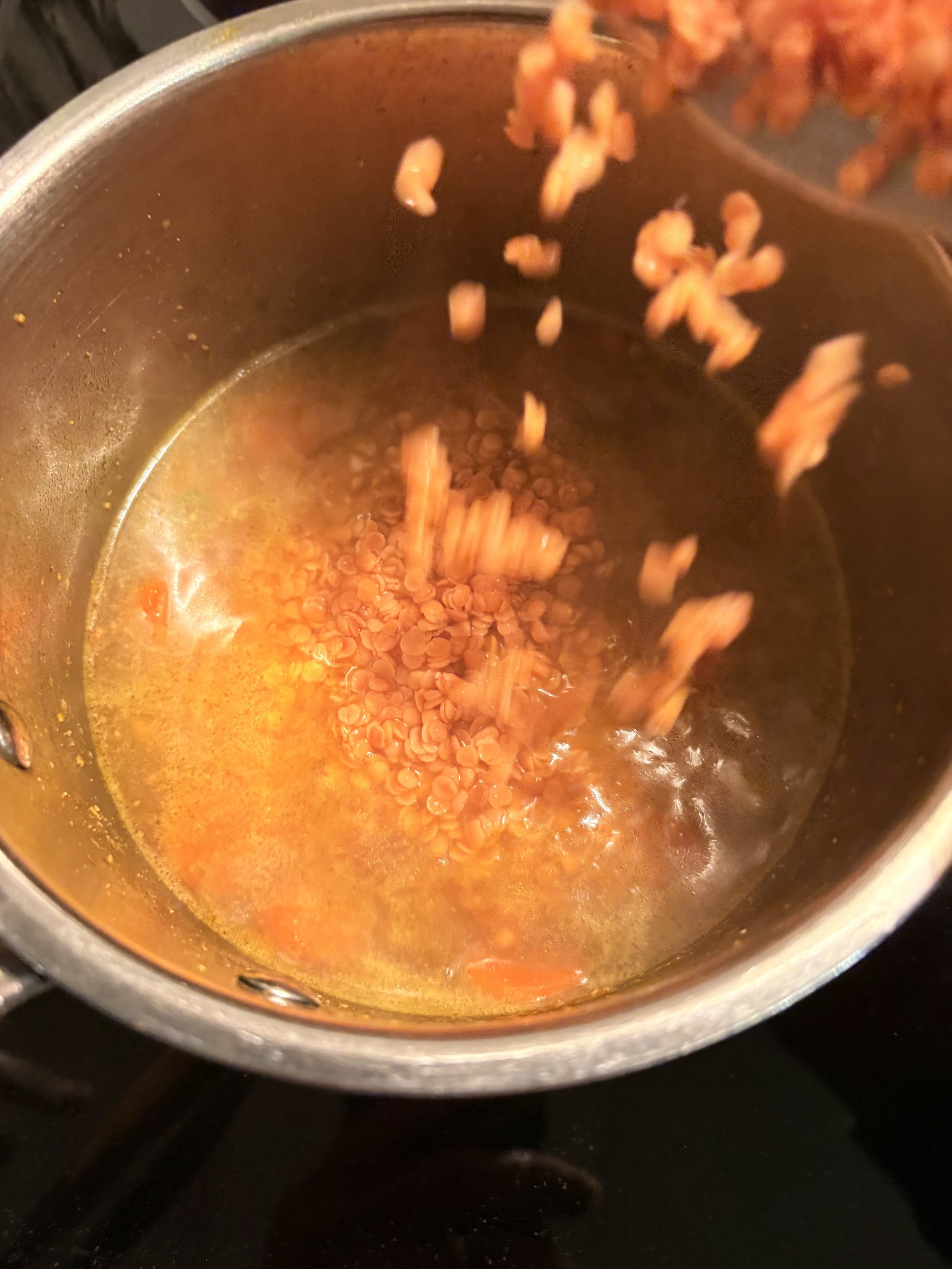
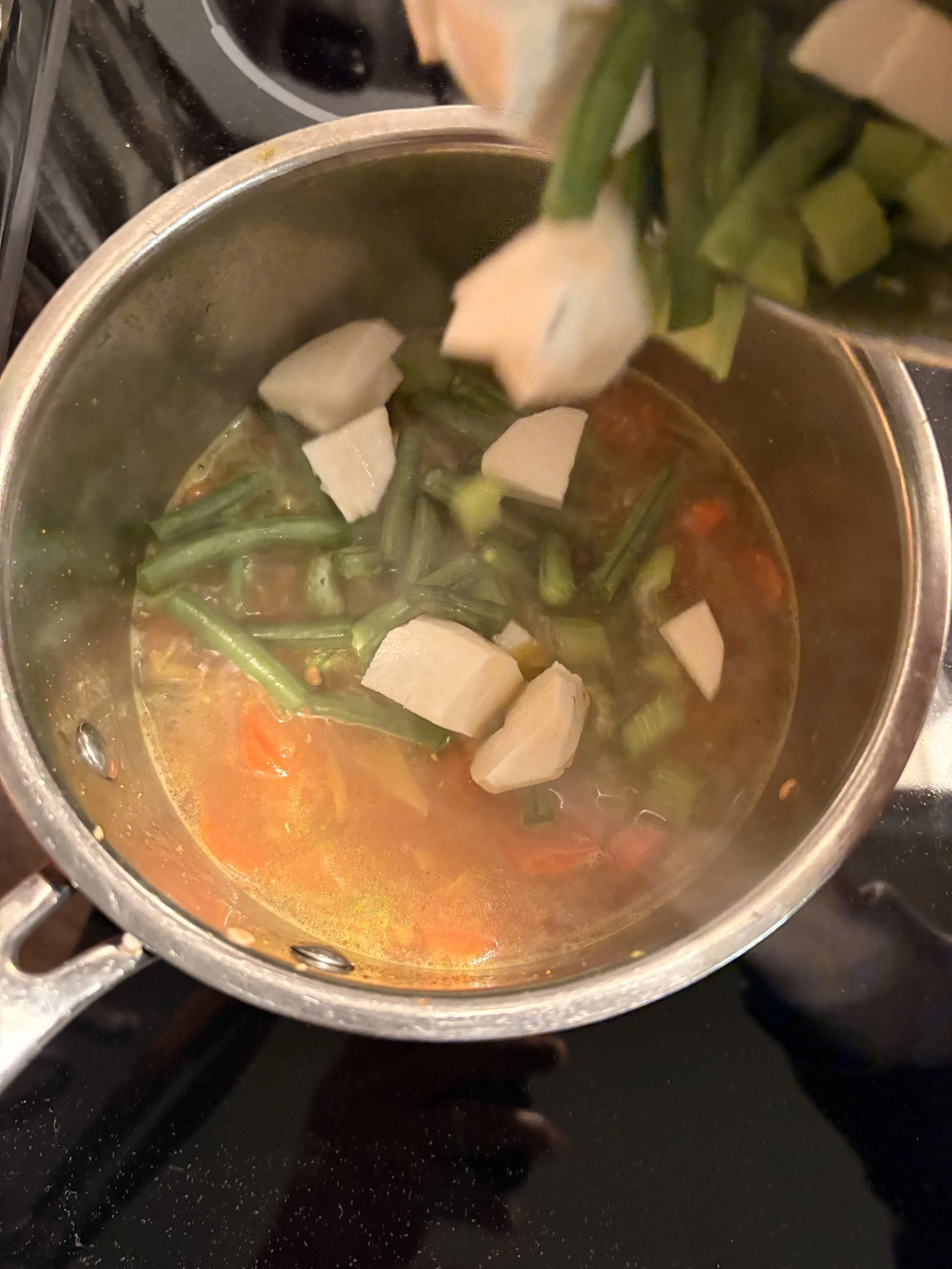
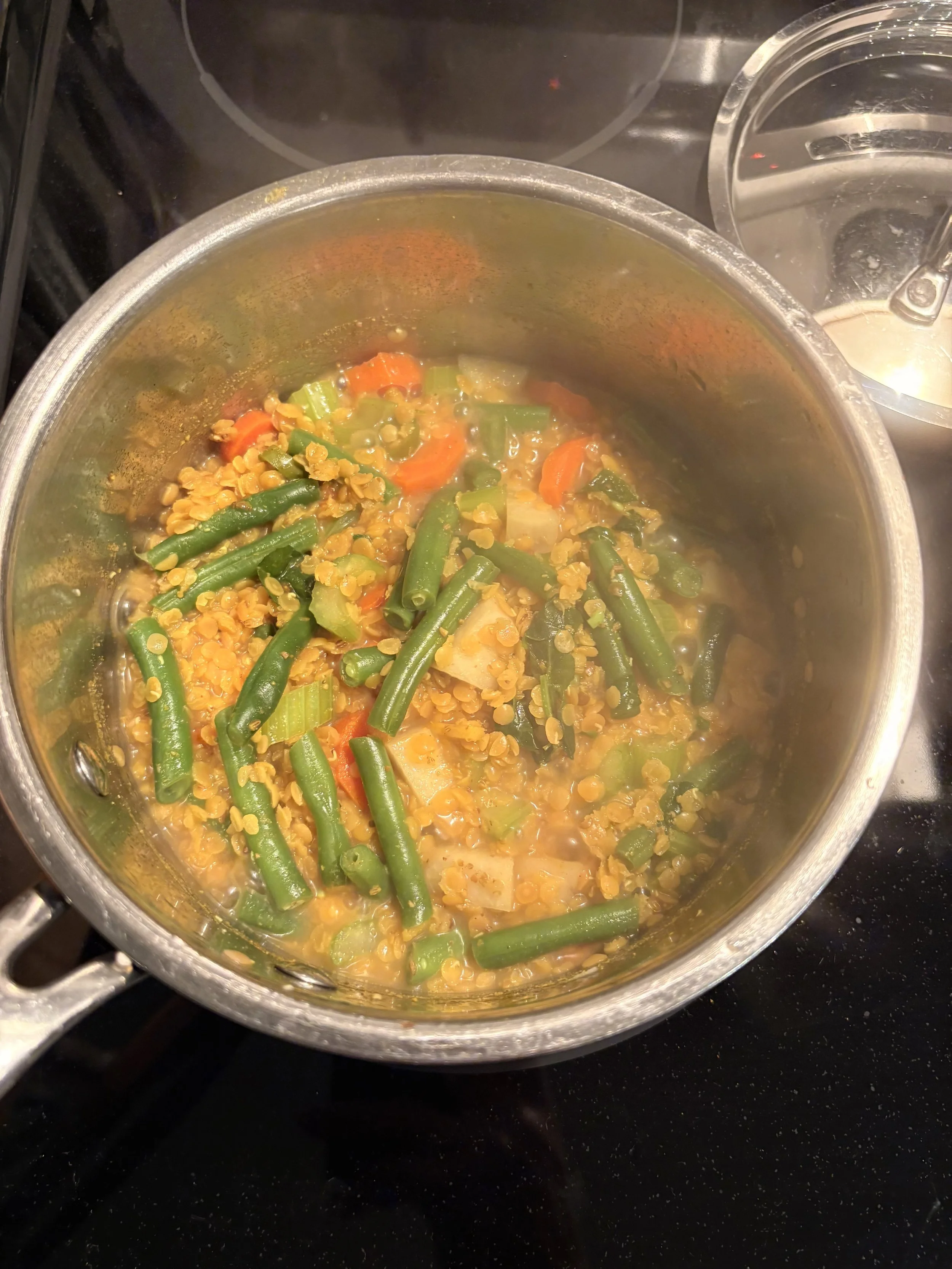
While carrots are cooking, rinse the red lentils thoroughly and add them to the pot along with the remaining vegetables and fenugreek leaves.
Bring to a boil.
4. Simmer and finish
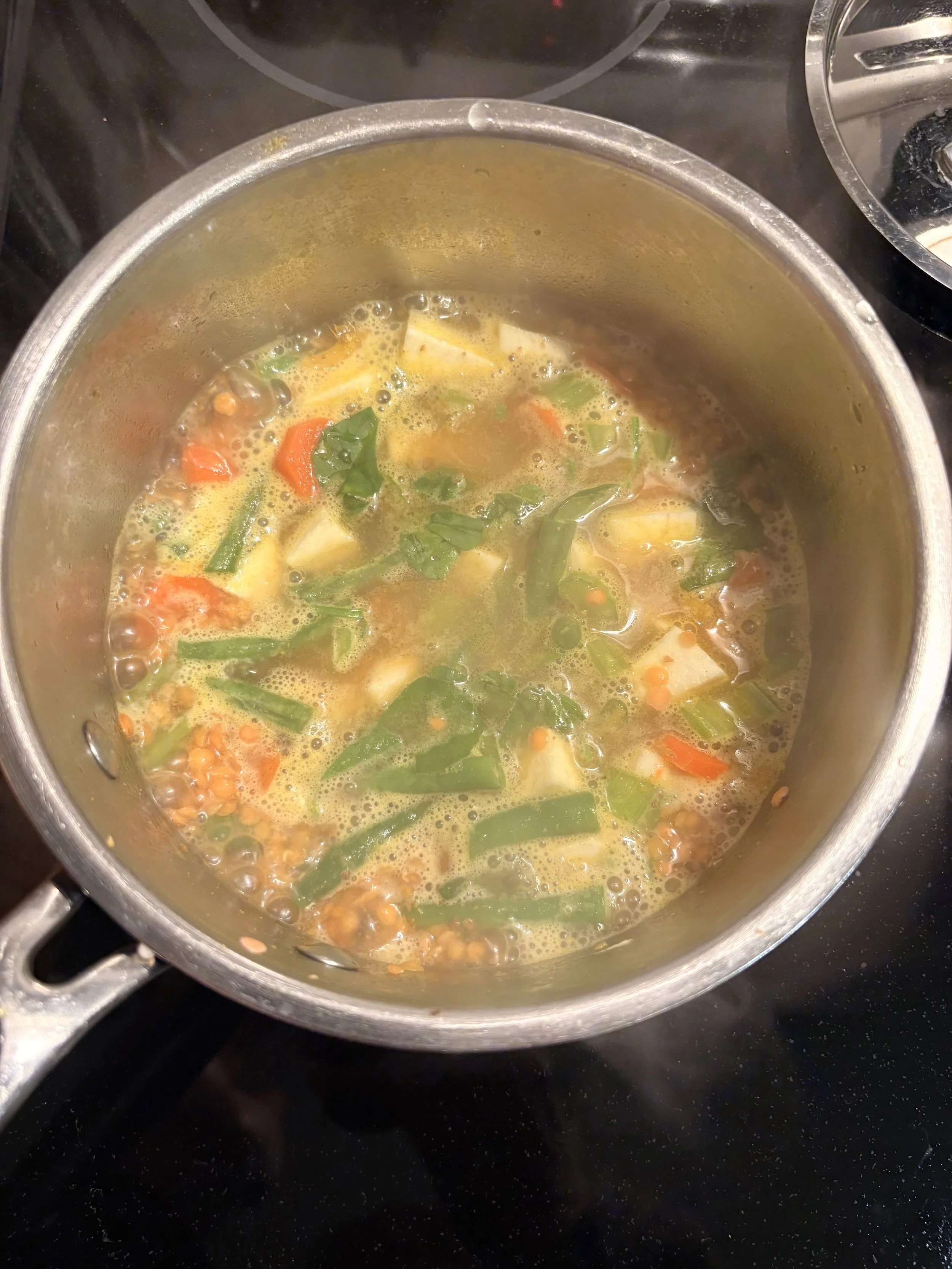
Cover with a lid, reduce the heat to medium-low and cook for 6-7 minutes.
At this stage, the lentils should be about more than half-way cooked, with most of the water absorbed.
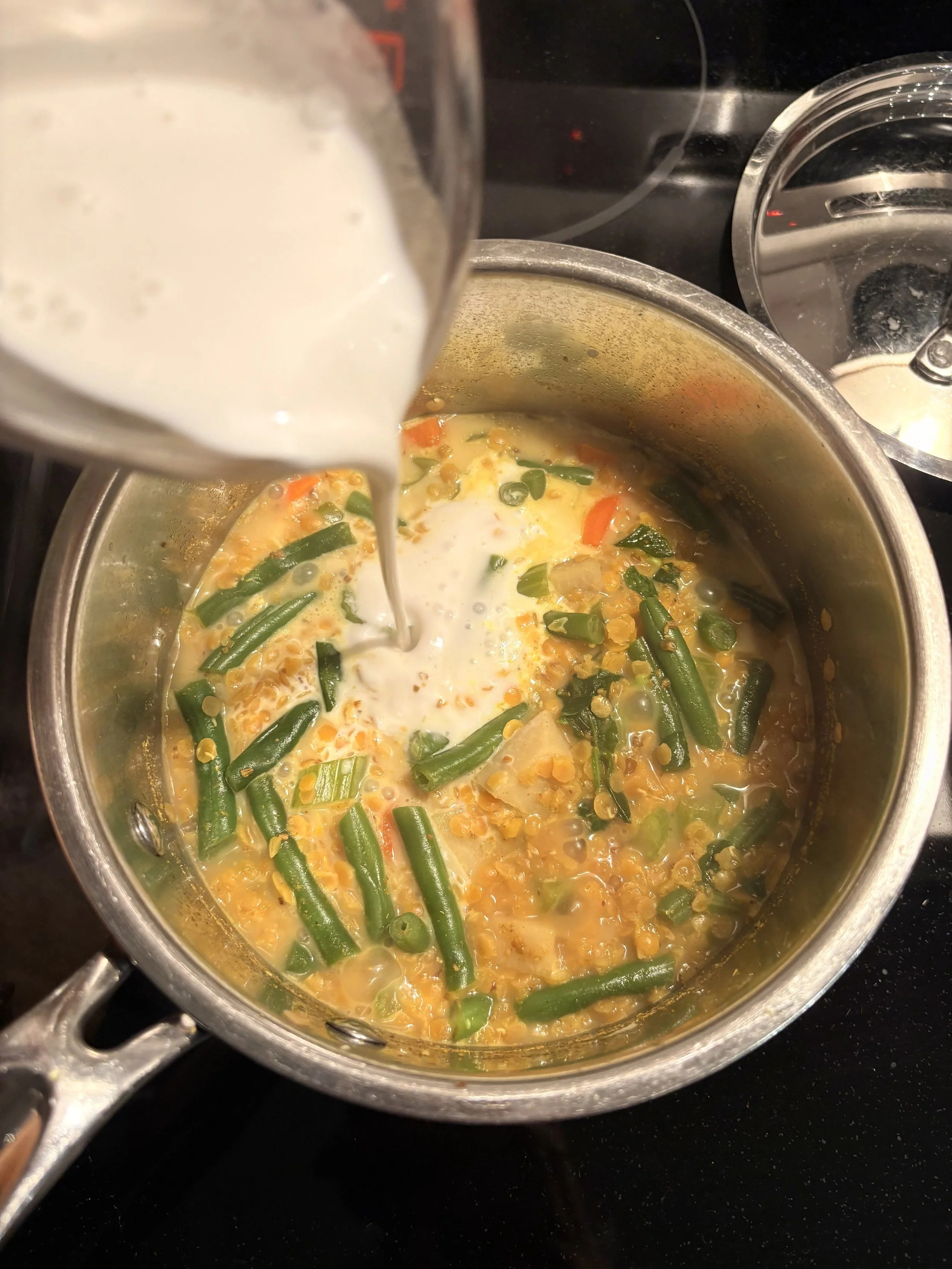
Add coconut cream, starting with ¼ cup. Add more if you like it creamier, or a little extra water if you prefer less creamy.
Add raw cane sugar- if adding, and salt to taste, and stir all together. Cover again and continue cooking over low heat for about 5 more minutes.
Serve warm and garnish with cilantro leaves.
Enjoy!
Ayurvedic Profile of Spices
Fennel Seeds- cooling and balancing for all doshas; supports healthy digestion without overheating the body
Coriander Seeds- cooling quality with cleansing properties
Cumin Seeds- supports digetion helping the body break down food and improve nutrient absorption
Turmeric- “friend to the liver”, warming spice, antioxidant, anti-inflammatory, anti-viral, cleans the blood
Ginger- heating quality, anti-inflammatory properties; good for arthritis, nausea, and excess mucus; caution when using in summertime, and with high pitta dosha
Thai Green Chili- heating quality, channel opening; contains more soma (cooling energy) than thai red chili
Fenugreek- aids in fat and protein metabolism
Cilantro- the plant of a coriander seed; cooling quality; used for detoxing heavy metals; ensure you eat foods that bind the toxins the day you have cilantro or coriander like taro- in this recipe, or barley, arrowroot, okra
Soma salt- also known as Soma Lavan, a rock salt; written in the Ayurvedic texts as the best salt; contains less sodium and is a cooling variety compared to Himalayan salts, and all other salts; high in minerals containing magnesium, calcium and potassium
References
Vaidya R. K. Mishra- Notes from Shaka Vansiya Ayurveda Courses, Practicum, Conferences and Lectures 2003-2015

Hi I’m Evangeline!Welcome to my blog. I’m a mom, an Ayurveda & Yoga Counsellor, Certified SVA Detox Educator, and Registered Massage Therapist. I began this blog during the early days of covid19 to stay connected with my clients. Here I share nourishing recipes I cook for family and friends, along with health tips and ayurveda and yoga wisdom to support balance, health, and vitality in everyday life. I hope you find something here that benefits you and your loved ones.