Updated October 12, 2026
Over the last few years, I’ve made a cake on my mom’s birthday. I miss her so much. 💖 She was a kind-hearted, spirited, and beautiful woman inside and out, and she loved her ginger tea. She would put thinly sliced ginger root in a pot of boiling water on the stove, and have it after dinner. A spice cake felt fitting this time around, reminding me of the aromatic scent of fresh ginger root that would linger throughout our home.
This was my first time making a spice cake, so I read through a few recipes to guide me on the proportions. Most used about four teaspoons of spices for a two-cup batter. One of my favourite spices, cardamom wasn’t common in the recipes I found, but allspice was. The spice balance is flexible, so feel free to adjust the spice ratios based on your preference. The version here is kid-friendly—my son loved it and immediately asked for another slice. He said he could “taste the spices, but it’s not too much,” which felt like the perfect balance.
As with all my recipes here, this spice cake recipe is infused with the knowledge of Ayurveda. Ayurveda is the ancient health system of India which means the “science of life”. Ayu means life and veda means science or knowledge. Ayurveda is at least five thousand years old and gaining a wider audience over the last few decades, likely following a similar trajectory to Yoga’s. In fact, Yoga and Ayurveda stem from the Vedas and together they are often referred to as “sister practices”. And in Ayurvedic cooking and baking spices are recognized for their ability to not only add flavour but for their therapeutic properties.
In addition to spices and herbs, balance, freshness and digestibility are other key elements in Ayurvedic cooking, and baking. Balanced flavour (based on the six tastes in Ayurveda- sweet, sour, salty, pungent, bitter, astringent), using fresh ingredients (the least refined and processed the better), and adding spices to further help break down, absorb and assimilate the food.
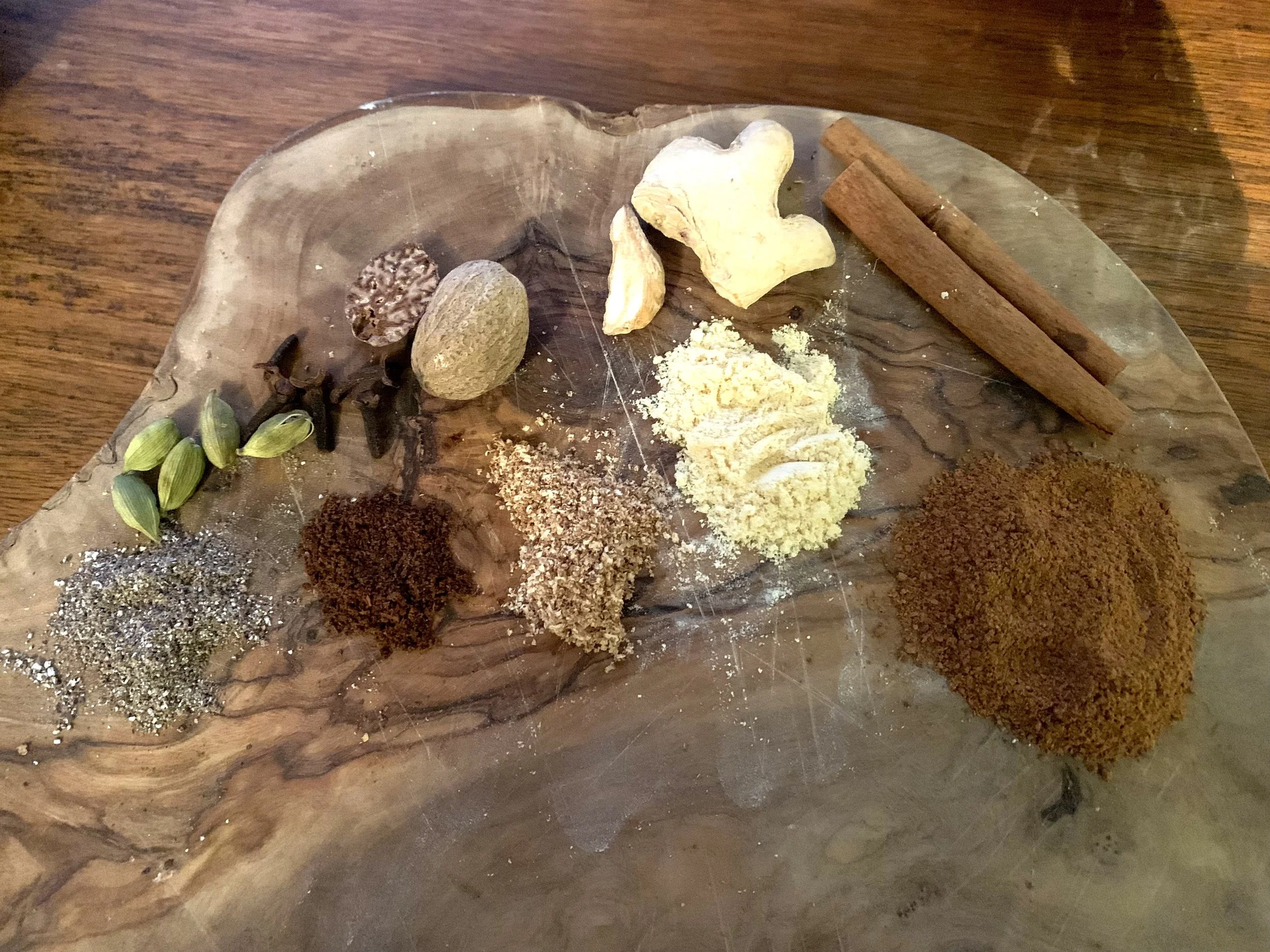
The spices used in this Spice Cake recipe. From L to R: cardamom, cloves, nutmeg, sunthi (Ayurvedic dried ginger root), cinnamon.
Cardamom - green cardamom known in SV Ayurveda for metabolizing protein- the pod’s skin binds the ama of protein molecules, and the seeds burn ama of the protein molecules; balances coordination between subdoshas of the stomach: samana vata, pachaka pitta and kledaka kapha
Cloves - opens the channels without aggravating pitta dosha
Nutmeg - calms the mind; has antiseptic properties; opens channels of the brain (yogavahi); energizes and balances the body; known in Ayurveda to support the nervous and endocrine system; has a sweet and musky aroma
Sunthi - Ayurvedic dried ginger root; ginger is a pungent, heating spice; helps break down fat molecules in the stomach; helps with arthritis (amavataghni) and constipation (vibandhanut); sunthi removes some of the heat and is less aggravating for high pitta conditions
Cinnamon - supports sugar and carbohydrate metabolism
As with all things, including spices, more is not necessarily better, even if it is good for you. Ayurveda pays close attention to the therapeutic value of spices and food with the understanding of their gross and subtle qualities. According to Ayurveda, food (ahara) is the first of three sub-pillars. Rest (nidra) and following the laws of nature (brahmacharya) are the other two. They function as a hierarchy. Food influences quality of sleep, and quality of sleep affects our mind and actions.
Ayurveda & Baking
My baking is simple, and with incorporating Ayurveda into it I use wholesome, fresh ingredients, organic when possible, and some substitutions to create healthy, balanced, yummy desserts:
Instead of using vegetable oil, which are heavily refined, I use melted ghee as ghee is not clogging to the physical channels, and not a refined oil. Read the benefits of ghee here. Olive oil or coconut oil is also an option. Coconut oil is heavy, and can be aggravating for several reasons—for example, if you have chronic digestive issues, you have a kledaka kapha imbalance. Because of coconut’s heavy quality, SV Ayurveda recommends only in small amounts, if you live near the equator and you have strong digestion.
Eggs and milk together are common ingredients in cakes and batters. Milk is a rich, heavy food with lot of soma energy. Since milk is not compatible with just about any food except grains and sugar, I sometimes use arrowroot or tapioca flour as the binding agent instead of eggs.
Add arrowroot for tapioca flour when substituting wheat-based flour with gluten-free flour , about 1-2 tsps per cup of gluten-free flour
Instead of refined sugar, I turn to unrefined or less refined cane sugar such as sucanat and muscovado. Honey is best not used in baking as it turns toxic when heated. When using maple syrup as your sweetener of choice you will need to add about 2 Tablespooons more flour.
Instead of refined flour I use whole grain flour.
Yeast causes bloating and gas and can lead to digestive issues; for example, when making pizza, I go with a flatbread made without yeast like a simple chapati for the crust.
I use soma salt in my cooking and baking. Soma salt, a rock salt high in minerals, with cooling properties compared to other salts that are heating, so not aggravating for pitta dosha. In Ayurveda’s ancient text Charak Samhita, Soma salt is considered the best salt of the eight types listed.
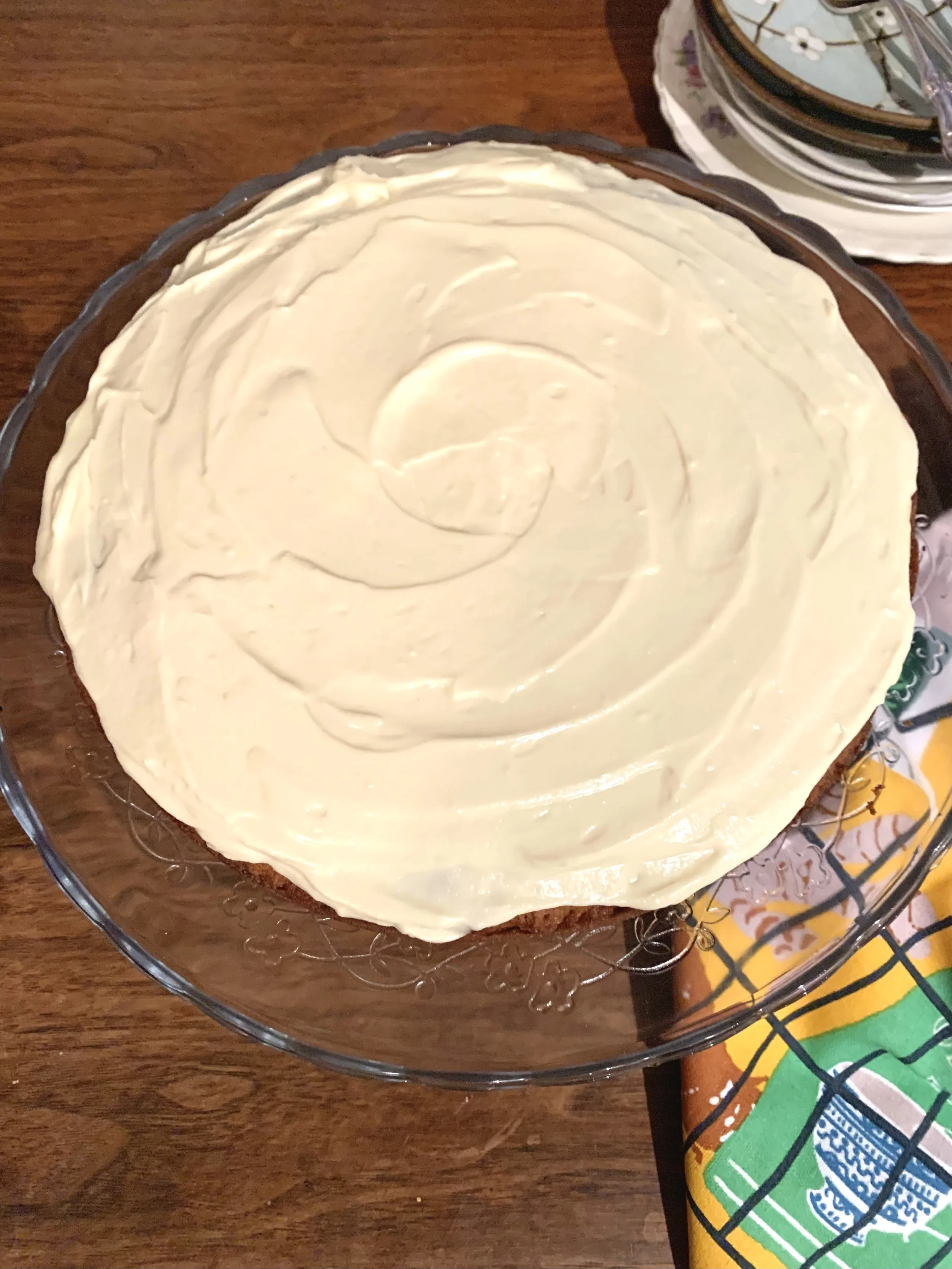
Spice Cake with Maple Syrup Cream Cheese Icing
Makes: 1 - 9 inch round cake
Prep Time: 15 minutes + 10 minutes if you grind your own spices
Bake Time: 30 minutes
INGREDIENTS for the cake batter
1 tsp ground dry ginger or grated sunthi
2 tsp ground cinnamon
1 tsp ground cardamom
½ tsp ground nutmeg
¼ tsp ground cloves
¾ cup ghee or coconut oil, melted
2 ¼ cups red fife or einkorn flour
2 tsps arrowroot flour
¾ cup sucanat cane sugar
2 tsps baking powder
¾ tsp baking soda
¼ tsp soma salt or sea salt
1 ⅓ cup buttermilk or 50-50 plain yogurt and water combined
INGREDIENTS for the icing
½ cup cream cheese
¼ cup butter or ghee, softened
¼ tsp ground cardamom (optional)
¼ tsp ground cinnamon (optional)
1 Tablespoon maple syrup
INSTRUCTIONS
Preheat oven to 350F.
Line a 9-inch round spring form pan with parchment paper and grease with some of the ghee. Set aside.
Melt the ghee in a small saucepan. Add the spices and whisk all together. Set aside.
Combine the flour, arrowroot, sugar, baking powder, baking soda and salt in a large bowl.
Add the spiced ghee and buttermilk in the flour mixture and mix all together by hand with a wooden spoon, or a mixer on medium speed. The batter will be a bit thick.
Transfer the batter into the pan, spreading evenly with a spatula.
Bake for 30 minutes, or when a toothpick comes out clean when poked through the centre.
Let cool on a wire rack for about 20 minutes if you plan to cover with icing, or serve after 10 minutes with a dollop of icing.
To make icing, combine the cream cheese and butter with a mixer until smooth, then add maple syrup and mix for another minute.
If serving the next day, cover the cake and store in a cool place or in the fridge. The next day, let the cake come to room temperature, about 30 minutes, before serving.
Enjoy!
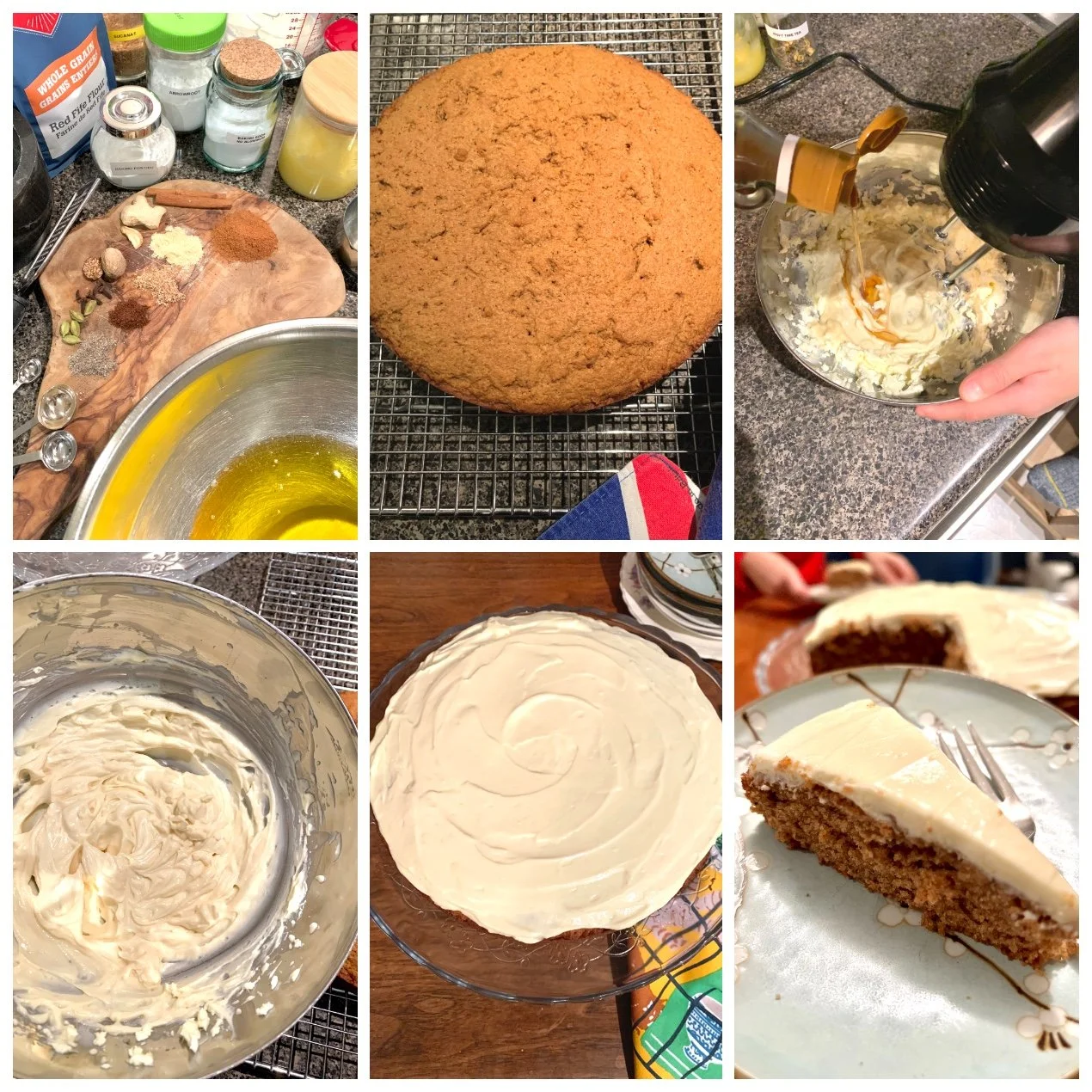
Reference
Vaidya R. K. Mishra- Notes from Shaka Vansiya Ayurveda Courses, Practicum, Conferences and Lectures, 2003-2015
David Frawley, Vasant Lad, The Yoga of Herbs, 2001

Hi I’m Evangeline!Welcome to my blog. I’m a mom, an Ayurveda & Yoga Counsellor, Certified SVA Detox Educator, and Registered Massage Therapist. I began this blog during the early days of covid19 to stay connected with my clients. Here I share nourishing recipes I cook for family and friends, along with health tips and ayurveda and yoga wisdom to support balance, health, and vitality in everyday life. I hope you find something here that benefits you and your loved ones.