Ayurveda provides us with so much inspiration and motivation to reconnect with ourselves, our bodies and our health. Its profound yet practical holistic approach is one of the oldest documented systems of health and healing, concerned not only with the body, but with the harmony of body, mind and spirit.
Ayurveda found me- or perhaps I found Ayurveda. I tend to think it was the former. My first introduction was through a section of Conscious Eating by Gabriel Cousens in the late 1990s. From there, I explored the teachings of Vasant Lad and David Frawley. But it wasn't until I met Vaidya Rama Kant Mishra and was introduced to his family's Shaka Vansiya Ayurveda (SVA) tradition that Ayurveda really came alive for me.
Ayurveda means “the science of life”—ayu means life and veda means knowledge or science. Ayurveda gives us knowledge for maintaining health and preventing and treating disease. Yoga, a companion practice, provide practices that bring body and mind into harmony, elevating spirit towards a union of great bliss.
The knowledge of Ayurveda is vast and comprehensive, cognized by the ancient sages of India through deep states of meditation and contemplation. They observed nature, the seasons, food, the body, the mind and consciousness, and the relationships between them.
Simply put, we can view Ayurveda as containing a wealth of knowledge and practices that reminds us:
What we eat and drink, when we sleep, how we move and live, and what we think has a direct influence on our health.
As with any system, getting to know the basics is a good place to start. We begin with prana and the doshas.
Prana is energy- the life force that flows about in nature and in the universe. It is in every living thing- in the air we breathe, in the food we eat, in the water we drink. Prana is what makes everything grow, move, and thrive.
Therefore, prana travels through our body via countless vibrational channels called nadis. In Traditional Chinese Medicine, these energy channels are known as meridians. The Chinese call prana chi, the Japanese call it ki. But across ancient healing systems, its meaning remains the same: a subtle force that animates life.
Prana is absorbed not only through breath but also through marma points- energy points found all over the body. When we’re surrounded by nature, we naturally feel more alive because we’re immersed in prana. It enlivens us, infusing every cell with nature’s intelligence.
Prana moves within us on a level so subtle it operates beyond our normal perception- in a deep, vibrational, subatomic world. Yet it’s constantly guiding our body, mind, and spirit in ways we often don’t even realize. This is the realm where prana speaks to us. For example, it is not unusual for clients to say to me- “I feel drained”, or “spent”, “broken”; sleep may be lacking and that could explain it, but it’s deeper. When sleep is adequate the same kind of phrase still pass through their lips. After a marma treatment or massage clients feel the positive effects- on a physical but also energy level.
As Ayurveda says: deha prana samyoge āyuh- life is the flow of prana. According to my teacher, Vaidya Rama Kant Mishra, prana is the ultimate healing factor.
The Threefold Nature of Prana
In Shaka Vansiya Ayurveda (SVA), prana is understood as having three interrelated components: soma, agni, and marut.
Soma is the cooling, nurturing vibrational energy emitted by the moon, governed by the water and earth elements, it stabilizes and sustains. According to SVA, soma is the raw material for ojas, the vital essence that supports immunity, resilience, and biological intelligence, so in the SVA tradition taking a walk after dinner is therapeutic- your body receiving more soma from the moon- helping you make ojas. Ojas is constantly being made in the body- as it is formed in the final stage of digestion, after food has nourished all seven tissue layers of the body:
plasma (rasa)
blood (rakta)
muscle (mamsa)
fat (meda)
bone (asthi)
bone marrow (majja)
reproductive tissue (shukra)
This is the order the tissues are made in the body. It takes about a month for the food you eat today to nourish all your seven tissues, after which ojas is made. Nourishment for each tissue takes about 3-5 days.
Agni is the radiant, transformative energy of the sun. It is hot, sharp, and penetrating, governed by fire and water elements. Agni governs metabolism and the conversion of food, thoughts, and experiences into usable energy and insight.
Marut is the subtle vibrational energy governed by space and air. It facilitates the movement of soma and agni, distributing them in a timely manner, intelligently throughout the body. Marut enables flow, communication, and integration.
When prana enters the body, the three components of prana become the three doshas:
Marut becomes vata dosha, agni, pitta dosha and soma, kapha dosha
Each dosha is governed by the same fundamental elements of its corresponding pranic component. Together, they weave the subtle intelligence of nature into our biology, guiding how we live, digest, heal, and thrive.
The Relationship between the 3 Components of Prana- Soma, Agni, Marut and The 3 Doshas- Vata, Pitta, Kapha
Ayurveda describes nature, including the human body, through five fundamental elements (panchamahabhuta or panchatattva): space, air, fire, water and earth. Outside the body, these five fundamental elements come together as the components of prana: soma (water + earth), agni (fire + water), and marut (space + air). Within the body, these same elements combine to form the three doshas: vata, pitta and kapha.
The Three Doshas
Vata- governed by space and air elements
Pitta- governed by fire and water
Kapha- governed by water and earth
We all have all three doshas, but in different proportions, giving each of us our individual constitution, or prakriti. The doshas are continually influenced by our food, lifestyle, age, environment, emotions and the changing seasons. By their very nature, they are constantly in flux and continually seeking balance.
The qualities and functions of the elements can be seen in how they express themselves through the doshas:
Marut- space and air (vata): govern movement, timing, flow and the distribution of substances and fluids throughout the body.
Agni- fire and water (pitta): govern heat, transformation and digestion.
Soma- water and earth (kapha): govern structure, stability, nourishment and lubrication, including the joints.
Agni, Ama, Amavisha and the Body's Physical Channels
A central concept in Ayurveda is agni, often translated as digestive fire. Digestion is not simply about the stomach digesting food. Ayurveda views transformation and metabolism as occurring throughout the body with agni (heat) involved in transforming food and experience into the substances and energy needed by the body.
When digestion and metabolism are functioning well, nourishment can be properly transformed and ultimately contribute to ojas- the refined essence made after food has been digested well. We’ll talk more about ojas below.
When digestion is impaired, however, food may not be properly transformed, and production of ojas decreases. Ayurveda refers to the resulting accumulation of improperly digested material as ama.
Ama is traditionally described as heavy, sticky and obstructive. Rather than thinking of it simply as a substance sitting somewhere in the body, it can be helpful to understand ama as a consequence of impaired digestion and metabolism that can interfere with the body's normal functioning. Digestion is impaired for many reasons, and we make ama for several reasons. Ayurveda provided a list of reasons. In my clinical practice, some of the main reasons include- eating distracted not focusing on eating, eating standing up, eating too fast, eating at the wrong time, eating too much at once when the previous meal had not been digested, eating heavy, hard to digest foods. When ama is not evacuated through elimination channels- bowels, urine, sweat, they can accumulate in the body. After a while ama turns into an acidic form, a second type of toxin, called amavisha- visha means poison in Ayurveda.
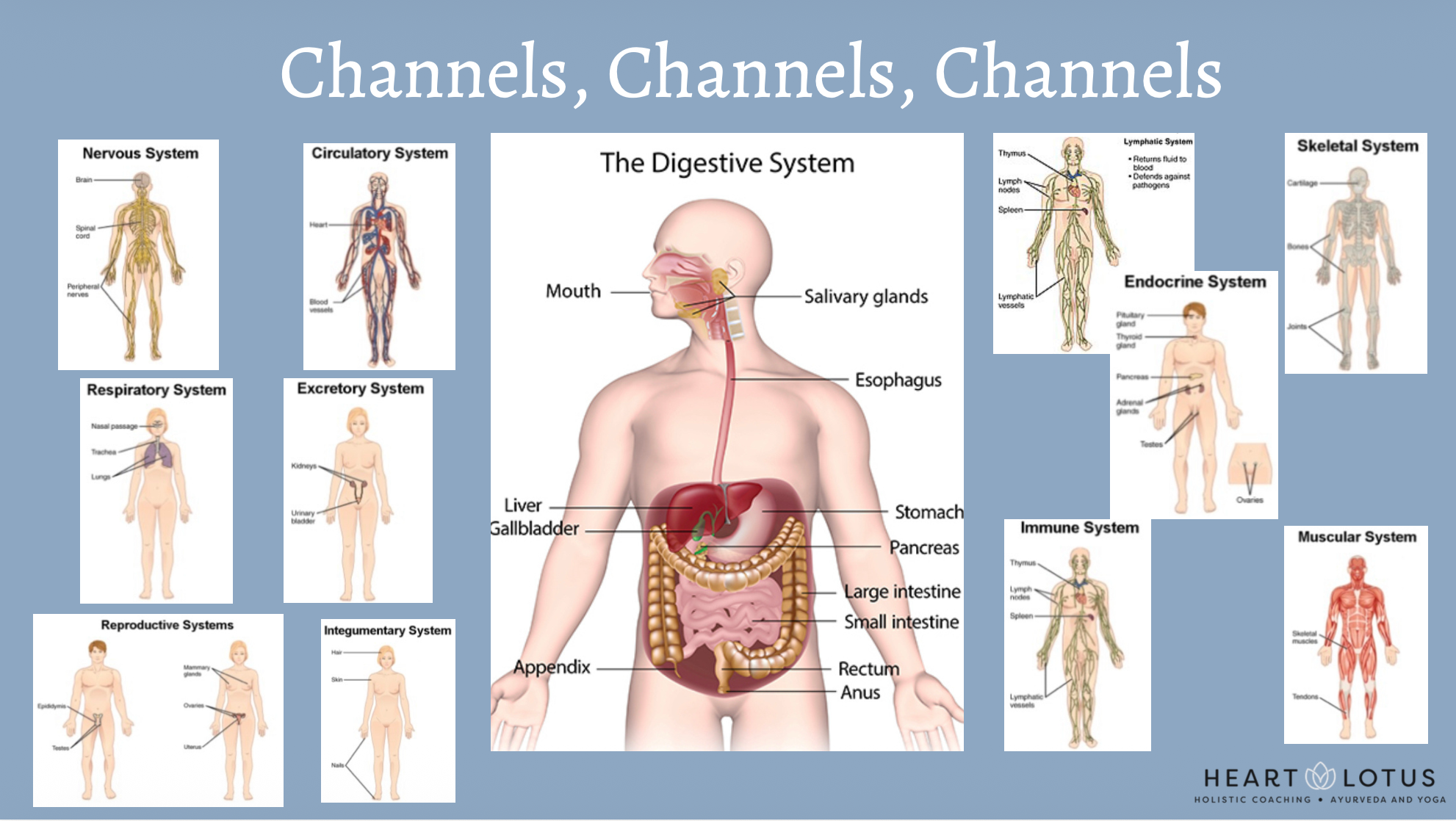
Ayurveda also describes an extensive network of physical channels throughout the body called shrotas. These include the pathways through which food, water, nutrients, waste products, breath and other substances move such as digestive channels, elimination channels, arteries, veins, lymph channels, lung channels, arterioles, capillaries.
This is why, in Ayurveda, we don't look only at what we eat. We also consider whether our food and lifestyle support healthy digestion and to keep these channels clear and functioning properly with the food we eat. It is very important we keep our shrotas- physical channels open for smooth passage and delivery of substances and nutrients, with proper food and a balance of rest and activity. This ties in with a very important. principle I learned from my Ayurvedic teacher- to choose foods that do not clog, inflame or constrict the body's channels. The goal is not simply to consume nutrients, but to ensure that the body can properly digest, assimilate, circulate and eliminate what we take in.

Ojas- Resilience & Vitality in the Body
As discussed, prana is energy with 3 vibrational forces coming from the moon, the sun and its movement. Prana travels in our energy channels, called nadis. We experience prana through breathing, in the food we eat, and in the water we drink. Prana flowing freely in our energy channels provides us with great energy and vitality, and so does ojas, but in Ayurveda ojas is made in the body.
Ojas is associated with the deepest nourishment and resilience of the body and is traditionally understood as the refined essence resulting from proper digestion and assimilation of food. Ojas is associated with vitality, resilience, immunity, neurotransmitters, hormones, and overall well-being.
In simple terms, we could say that Ayurveda is concerned not only with getting food into the body, but with what happens to it once it gets there.
Are we digesting food well? If not, why?
Are we accumulating ama, and creating amavisha?
Is our friendly bacteria thriving? - Yoginis- as my Ayurvedic teacher called them. Friendly bacteria responsible for helping digest the food we eat, and is our first line of defence.
Are we eliminating what we don't need?
Are our channels open, with food, substances and nutrients flowing for optimum absorption and assimilation?
These questions are fundamental to the Ayurvedic approach. These questions all tie into the quality of digestion. Ayurveda considers impaired digestion to be a major contributor to disease- in the traditional Ayurvedic view, many diseases can ultimately be traced back to disturbances in digestion.
Ancient Wisdom for a Modern World
Although Ayurveda is ancient, I don't believe it belongs only in the past.
This became particularly meaningful to me through my studies with Vaidya Rama Kant Mishra, who brought his family’s millennia-old Ayurvedic tradition, called Shaka Vansiya Ayurveda (SV Ayurveda/SVA), into conversation with the realities of modern life.
Vaidya Mishra had an extraordinary ability to take ancient principles and make them relevant to the world we live in today. We live very differently from the people for whom many of the classical Ayurvedic texts were written. We are exposed to processed foods, environmental pollutants, sedentary lifestyles, chronic stress, artificial light and technologies that surround us constantly.
His approach was therefore not simply to repeat ancient teachings, but to ask: How do we apply these principles in the world we actually live in?
Vaidya Mishra saw patients who could not tolerate orally digesting pills and capsules because of their overburdened livers and sensitive digestive systems. This is not uncommon in the world now. Therefore, he had to formulate Ayurvedic remedies in the form of herbal creams, lotions for topical application to bypass digestion. In addition he created what he called “herbal memory nectar” drops- a way of delivering the herb’s intelligence in molecular form that you add water to. In this way, these formulations could support the body while avoiding potential aggravation of the digestive channels, including the liver. In Ayurveda, the liver is known as the “seat of digestion”.
This is an important distinction.
Ayurveda is a living tradition. Its fundamental principles remain the foundation, while their practical application can evolve as our environment and way of life change.

Understanding Toxins in a Modern World
SV Ayurveda further developed the traditional Ayurvedic understanding of toxins to address some of the exposures encountered in modern life.
In the SVA approach I studied, four different categories of toxins are identified and explained through an updated interpretation of the classical teachings. This includes toxins associated with improperly digested food (endogenous toxins: ama and amavisha), and environmental influences known as garvisha in Ayurveda (exogenous toxins: heavy metals- such as mercury, lead, cadmium, thallium, arsenic)
The fourth toxin is electromagnetic exposure- from TVs, cell phones, electricity, WiFi, cell phone towers etc. This type of toxin cause problems in the our energy channels- called nadis, where prana travels- so flow of prana is disrupted. The other three toxins (ama, amavish, garvisha) cause problems in our physical channels.
Vaidya Mishra taught practical ways of reconnecting with nature as a way of helping the body settle with exposure to the technological environment we now live in. His recommendations to offset electromagnetic exposure included spending time in nature, lying down on grass, covering the body with clay, bathing, being around trees, and even hugging a tree- all grounding experiences. I recall Vaidya Mishra recounting patients he saw when he began seeing patients in the Western world in the early 1990s who had symptoms of electromagnetic frequency exposure- one them described it as “ants crawling underneath my skin”. Vaidya recommended for them these grounding protocols, and their symptoms dramatically improved.
He once used the example of a snake: a snake's venom is considered “hot,” and when the snake needs relief, it may wrap itself around a tree. He used this as an analogy for the way the body can seek cooling and grounding through contact with nature to pacify electromagnetic frequencies.
Whether or not we interpret this literally through the language of modern science, the underlying Ayurvedic principle is meaningful: our bodies are part of nature, and spending time in nature can be profoundly regulating, particularly for pacifying our exposure to modern technologies.
This idea has become even more relevant to me in a world where many of us spend much of our day indoors, working in front of a computer, sitting, watching TV, playing video games, surrounded by WiFi, and disconnected from natural environments.
Detoxification in a Toxic World
Ayurveda has always placed importance on proper elimination and periodically supporting the body's natural processes of cleansing and renewal. But Vaidya Mishra recognized that the modern world creates a different set of challenges.
This is one reason he taught practitioners how to bring panchakarma principles into the home in an appropriate and practical way. For some, panchakarma treatments at a clinic is simply not viable.
Panchakarma is traditionally a deeper Ayurvedic system of cleansing and rejuvenation. In SVA Ayurveda, Vaidya Mishra trained practitioners to teach clients appropriate home practices so that certain aspects of this traditional approach could be carried out safely and practically outside of a clinical setting.
This was part of what made his teaching so relevant to me. He wasn't asking us to live as though we were living thousands of years ago. He was asking us to understand the principles, and then consider how they could be applied to modern life.
Food as Medicine
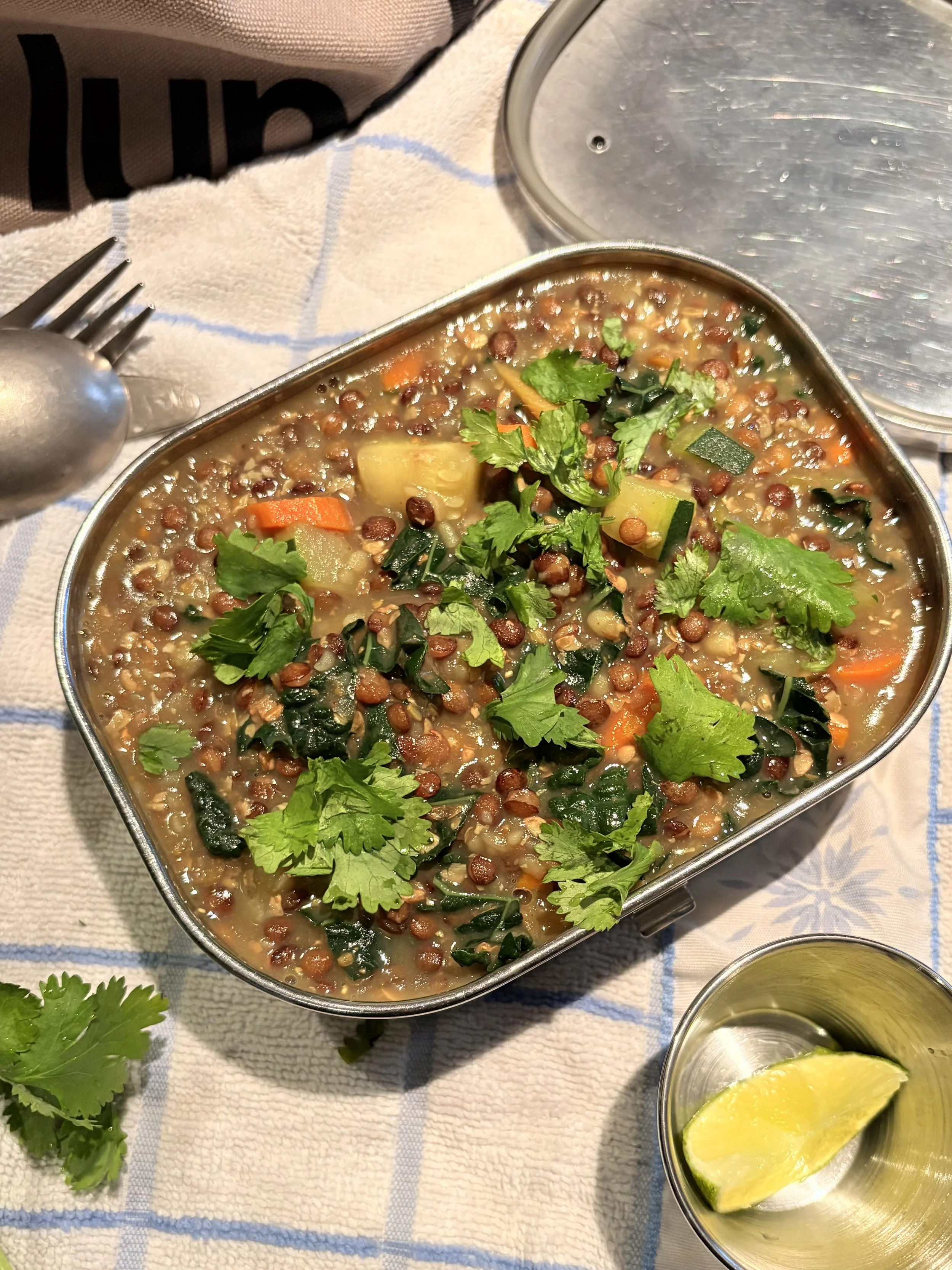
This brings us to food. Diet has profound effects on our health. This perspective has helped tremendously in the way I cook and eat and advise clients.
Ayurveda recognizes food not simply as calories, vitamins and minerals, but as something that has qualities and effects on the body, digestion and mind. Fresh, properly prepared food that suits the individual can nourish us, while food that is heavy, over-stimulating or not appropriate at a point in time can burden the body.
This is why Ayurvedic cooking places so much emphasis on knowing the ingredient’s effect, proper preparation, addition or avoidance of spices, seasonal foods and digestive capacity.
You may notice that many of my recipes on my blog do not contain garlic or onions, or nightshade vegetables (white potatoes, tomatoes, bell peppers and eggplant), or that I list them as optional. This comes from the Ayurvedic approach I was taught, which considers not only the nutritional properties of a food but also its energetic and digestive effects. Garlic and onions have a heating quality that can harm friendly bacteria; nightshades have a quality that constricts the physical channels.
This doesn't mean that a particular food is universally “good” or “bad.” Ayurveda continually brings us back to the individual: Who is eating it? How well are they digesting it? What season is it? What is happening in the body right now?
That is a very different approach from simply asking whether a food is healthy according to a universal list.
Where Ayurveda Meets Modern Science
I find it fascinating when contemporary research provides a physiological explanation for observations that Ayurvedic practitioners have made for centuries.
For example, modern research has explored compounds such as phytates, tannins, lectins and oxalates in plant foods and their effects on digestion and nutrient availability. Food preparation methods such as soaking, sprouting, fermenting and cooking can alter these compounds, further helping as digest, absorb and assimilate the foods we are eating.
Research into the gut-brain axis has also demonstrated the complex communication between the digestive system, the nervous system and the brain- an area that resonates with Ayurveda's long-standing emphasis on digestion as fundamental to overall health, a relationship called apana-prana.
These are not necessarily one-to-one scientific validations of Ayurvedic concepts. Ayurveda and modern biomedical science use different frameworks and methods of understanding the body. But the points of intersection are fascinating, and to me, worth exploring.

Ayurveda for Life
Ultimately, Ayurveda is not about perfection.
It is about paying attention and honouring our needs in support of our health.
It teaches us to notice how we feel before and after we eat, our sleep, how we respond to stress and how the season is affecting us- whether our daily habits are supporting or depleting us.
It asks us to work with nature and with our body- to pay attention to the cycles of the sun and moon, to rise with the sun and rest when the moon is up, to eat our meals at appropriate times, or simply notice- am I rushing around too much, how is the changing seasons and weather affecting not only how I dress, but also what I eat as I pay attention to its inherent qualities- is it clogging, inflaming or shrinking my physical channels, and how I’m eating- am I focusing on eating, am I seated enjoying my food, or doing something else.
What we notice can lead to change for the betterment of our health- changing how we move throughout the day, or what we eat. Sometimes it means going to bed earlier, taking a walk, spending time outside, breathing more consciously, receiving bodywork, calling a loved one, simplifying our schedule or giving the digestive system a little more support.
And sometimes it means doing less.
This is what I have come to appreciate most about Ayurveda and, in particular, the SV Ayurveda tradition I studied with Vaidya Rama Kant Mishra: ancient principles can still offer practical guidance for modern life when we understand the principles deeply enough to apply them thoughtfully to the world we live in today.
Ayurveda gives us a language for understanding our relationship with food, nature, digestion, the body, the mind and our own vitality- and reminds us that health is not something we pursue only when we are sick or given a diagnosis. It is something we cultivate, day by day.
References
Vaidya R. K. Mishra- Notes from Shaka Vansiya Ayurveda Courses, Practicum, Conferences and Lectures 2003-2015

Hi I'm Evangeline!Welcome to my blog. I’m a mom, an Ayurveda & Yoga Counsellor, Certified SVA Detox Educator, and Registered Massage Therapist. I began this blog during the early days of covid19 to stay connected with my clients. Here I share nourishing recipes I cook for family and friends, along with health tips and ayurveda and yoga wisdom to support balance, health, and vitality in everyday life. I hope you find something here that benefits you and your loved ones.